Built around every child.
Horizon International School is a Candidate School* for the IB Primary Years Programme. From Kindergarten to Grade 5, learning starts with each child's questions, strengths and pace, in a school small enough for every teacher to know every child by name.
* Horizon is a Candidate School pursuing authorization as an IB World School. Read the full statement.
What the IB PYP actually is
The Primary Years Programme is the International Baccalaureate's framework for children aged 3 to 12. IB programmes are taught in more than 6,200 schools in over 160 countries. At Horizon, the PYP runs from Kindergarten to Grade 5.
It does not replace subjects. It connects them.
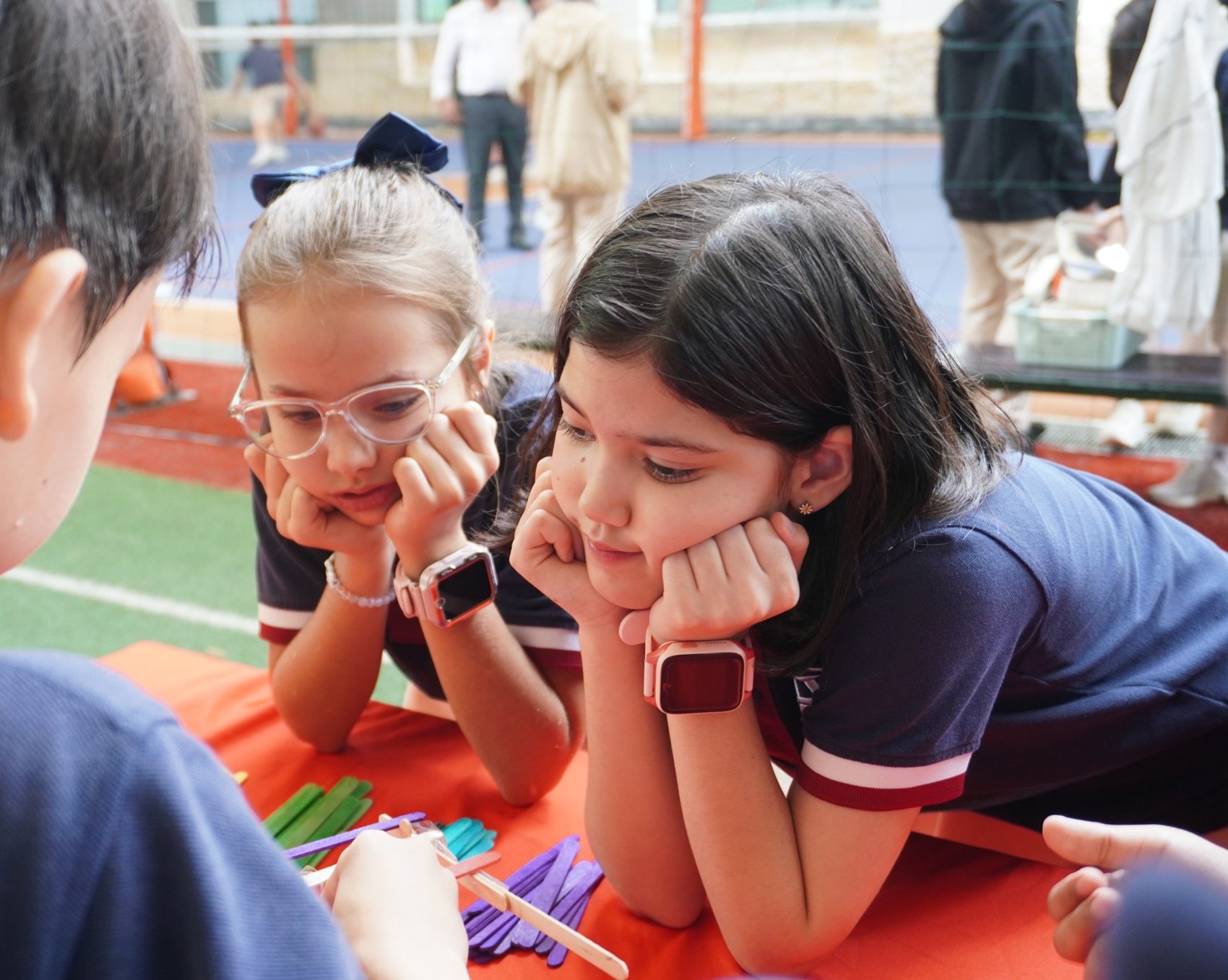
Children still learn to read, write and calculate. The difference is that they use those skills to answer a question that matters to them, and a teacher who knows them decides how far to take the answer.
Six themes, one connected curriculum
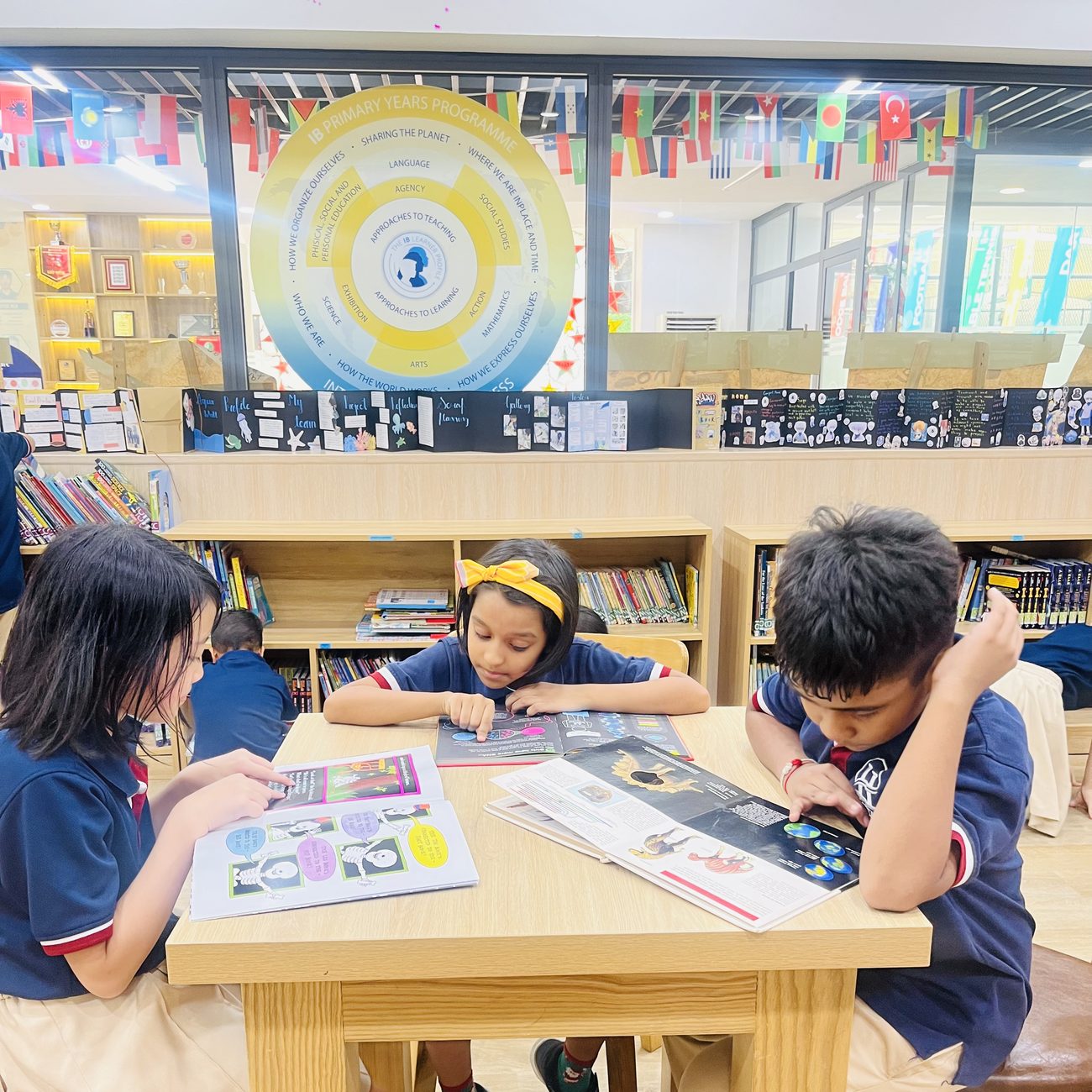
The six transdisciplinary themes return through the programme, at a deeper level each time.
Ten attributes, taught on purpose
The IB learner profile names the kind of person a PYP child is becoming. At Horizon it is reported alongside academic progress.
It starts with play
In Kindergarten, play is how children inquire. They build, sort, test and ask, and a teacher shapes each discovery into learning.
It ends with something real
In Grade 5, students research, present and defend the PYP Exhibition, the culmination of everything the programme has taught them.
Inside a unit of inquiry
One central idea. Around six weeks. Every subject pulling one way, in every classroom from Kindergarten to Grade 5. Here is what each stage looks like at Horizon.
Tuning in
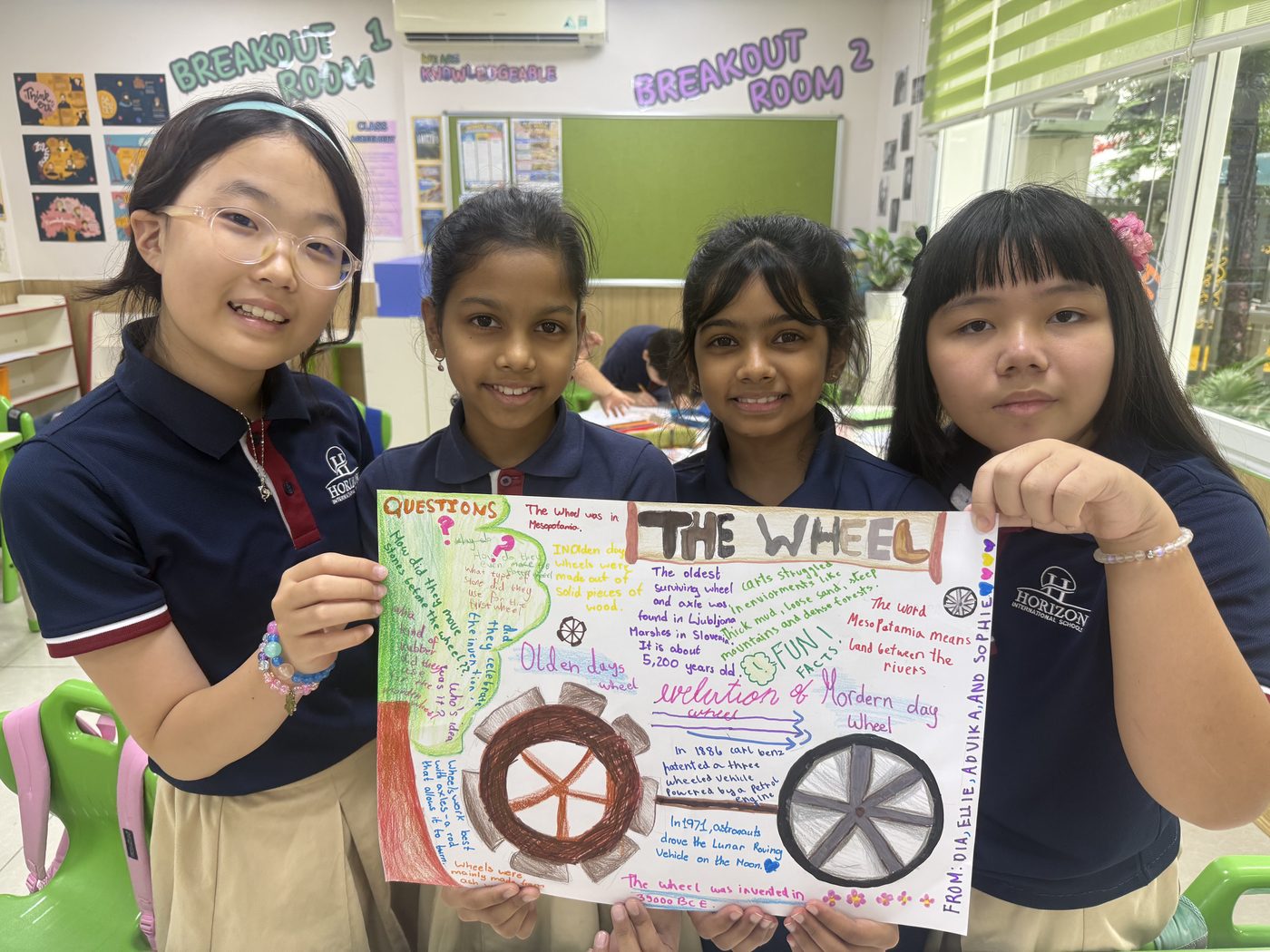
Something lands in the classroom. The children ask the questions.
Pictured: a poster on the wheel that opens with the learners' own questions.
Finding out
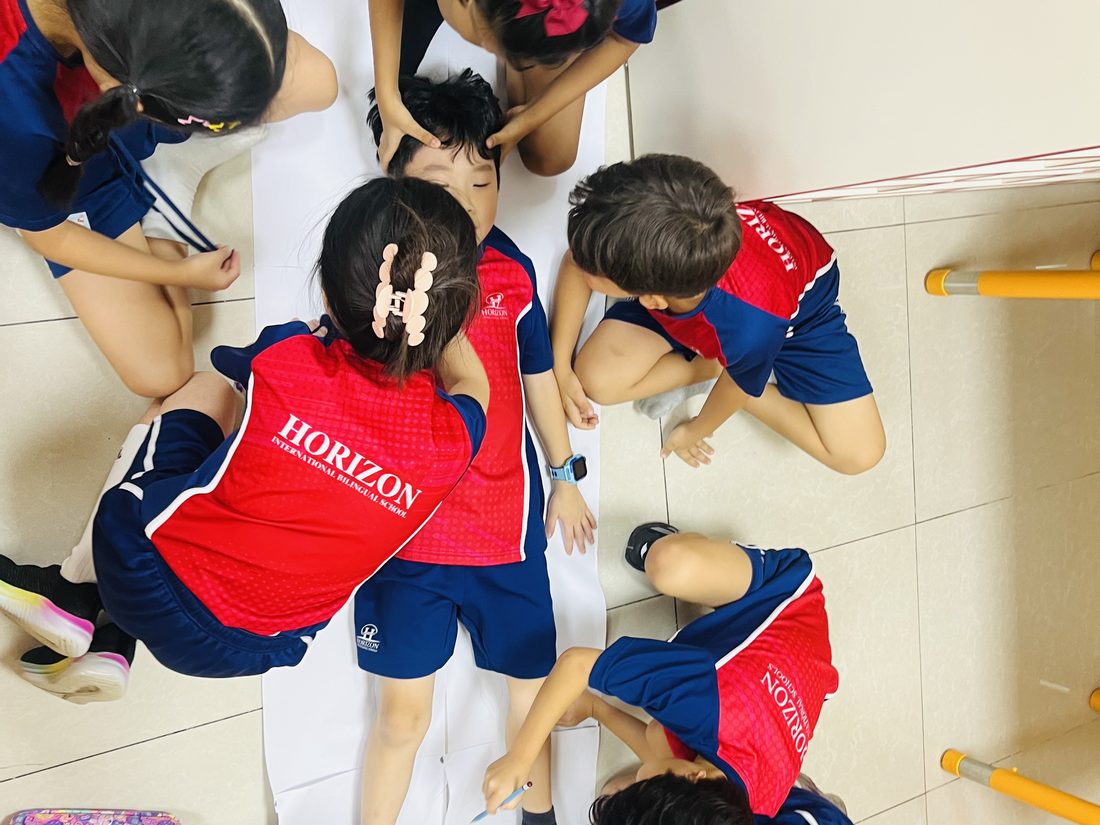
Research, experiments, interviews. Maths and literacy feed the inquiry.
Pictured: tracing a classmate, life-size, to study the human body.
Making meaning
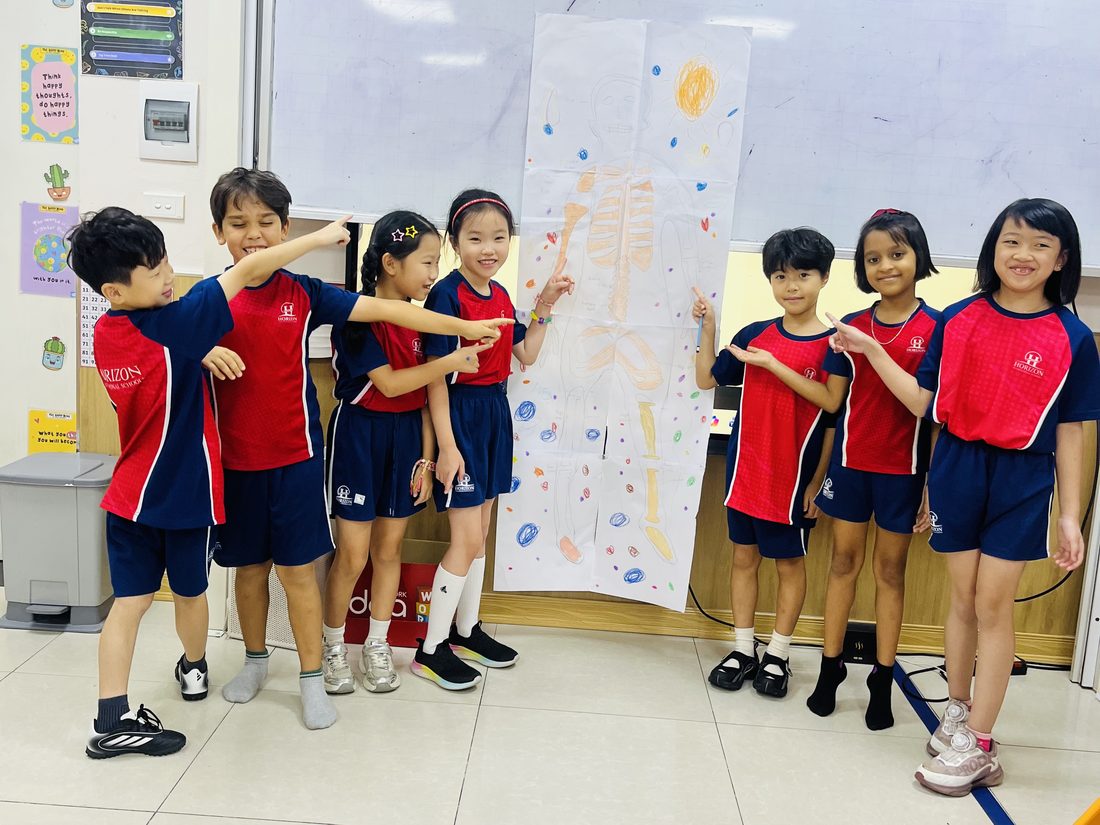
They sort what they found against the central idea.
Pictured: the finished skeleton, drawn bone by bone by the group.
Taking action
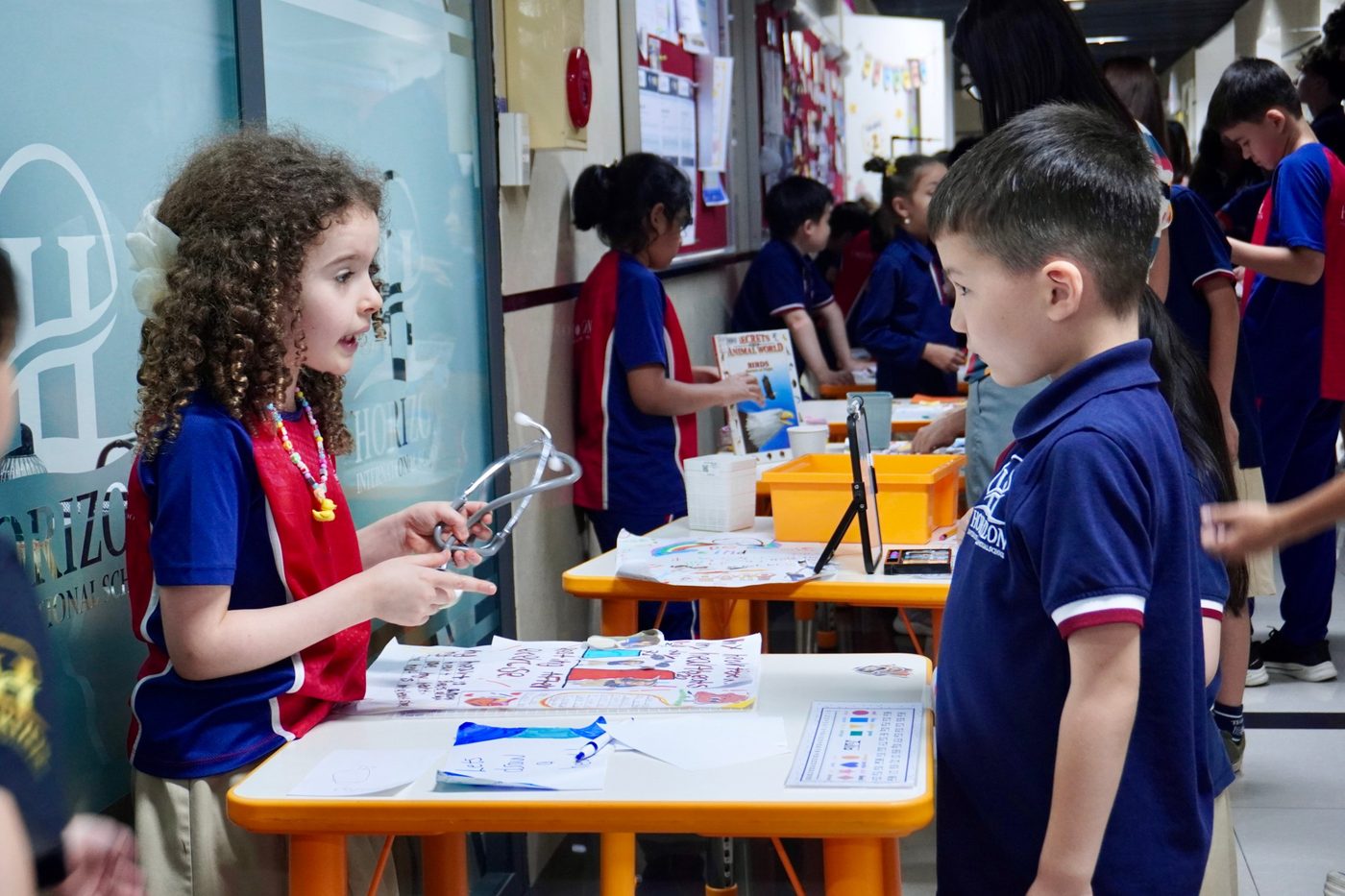
They decide what to do about it. The action is chosen by the students.
Pictured: teaching a classmate what was learned, stethoscope in hand.
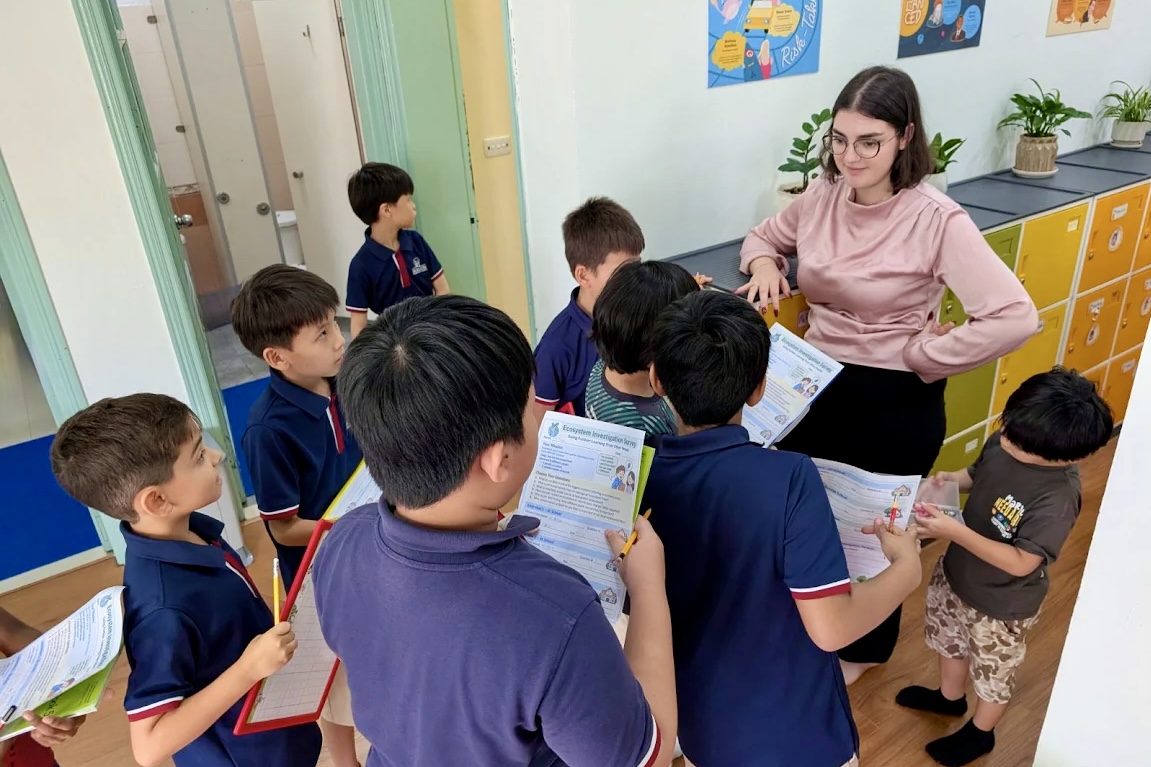
Inquiry needs a teacher who knows the child
That takes a small school. Horizon has been one for more than twenty years.
Every decision should have a direct benefit for student development.
The principle behind every choice at Horizon, from the timetable to the size of the school.
Learning does not stop at the classroom door
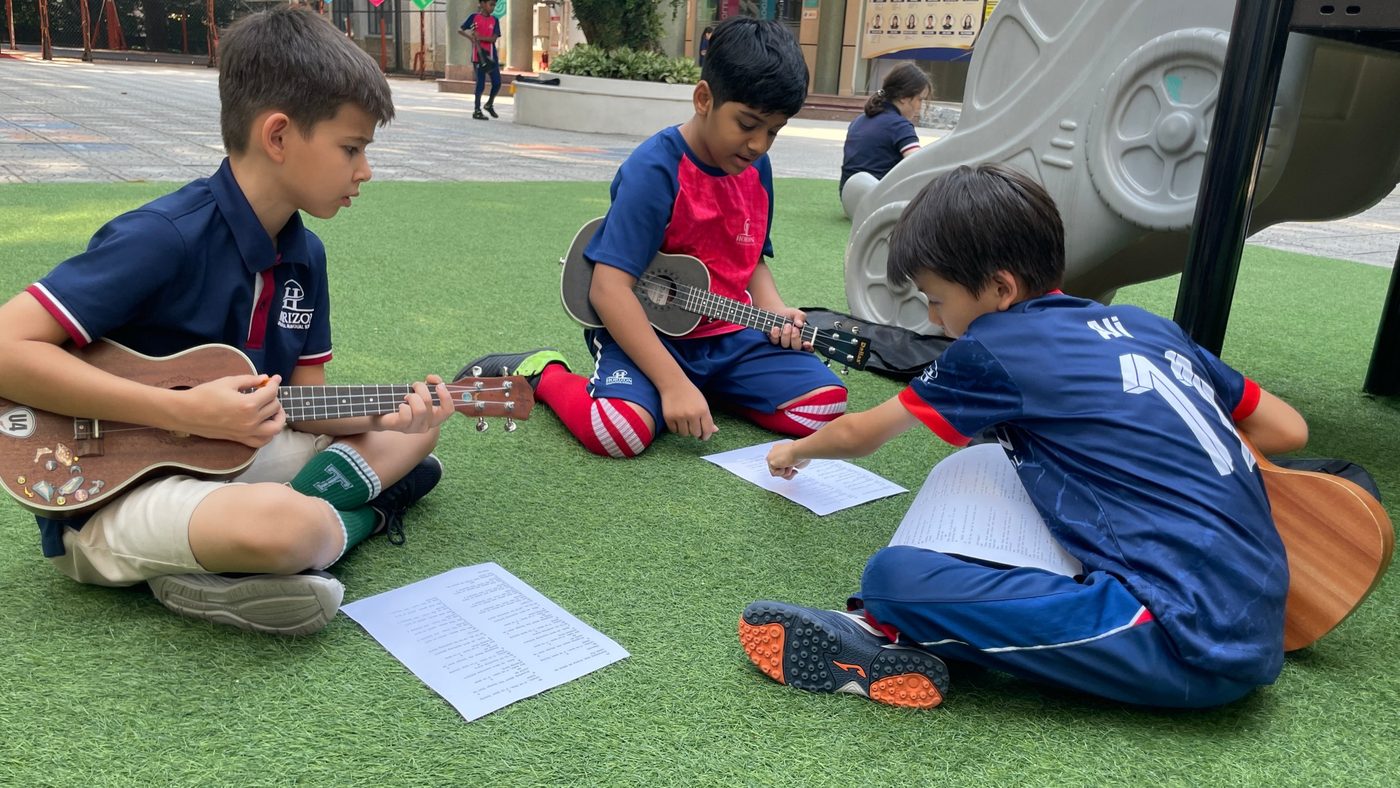
Balanced is one of the ten attributes.
How to follow your child's learning
A PYP classroom looks different from the one most parents remember. Here is how progress is measured, how to help at home, and when to come in and see it.
Questions about the programme go to Mr. Aman Rejep, Head of Academics, Primary, and PYP Coordinator.
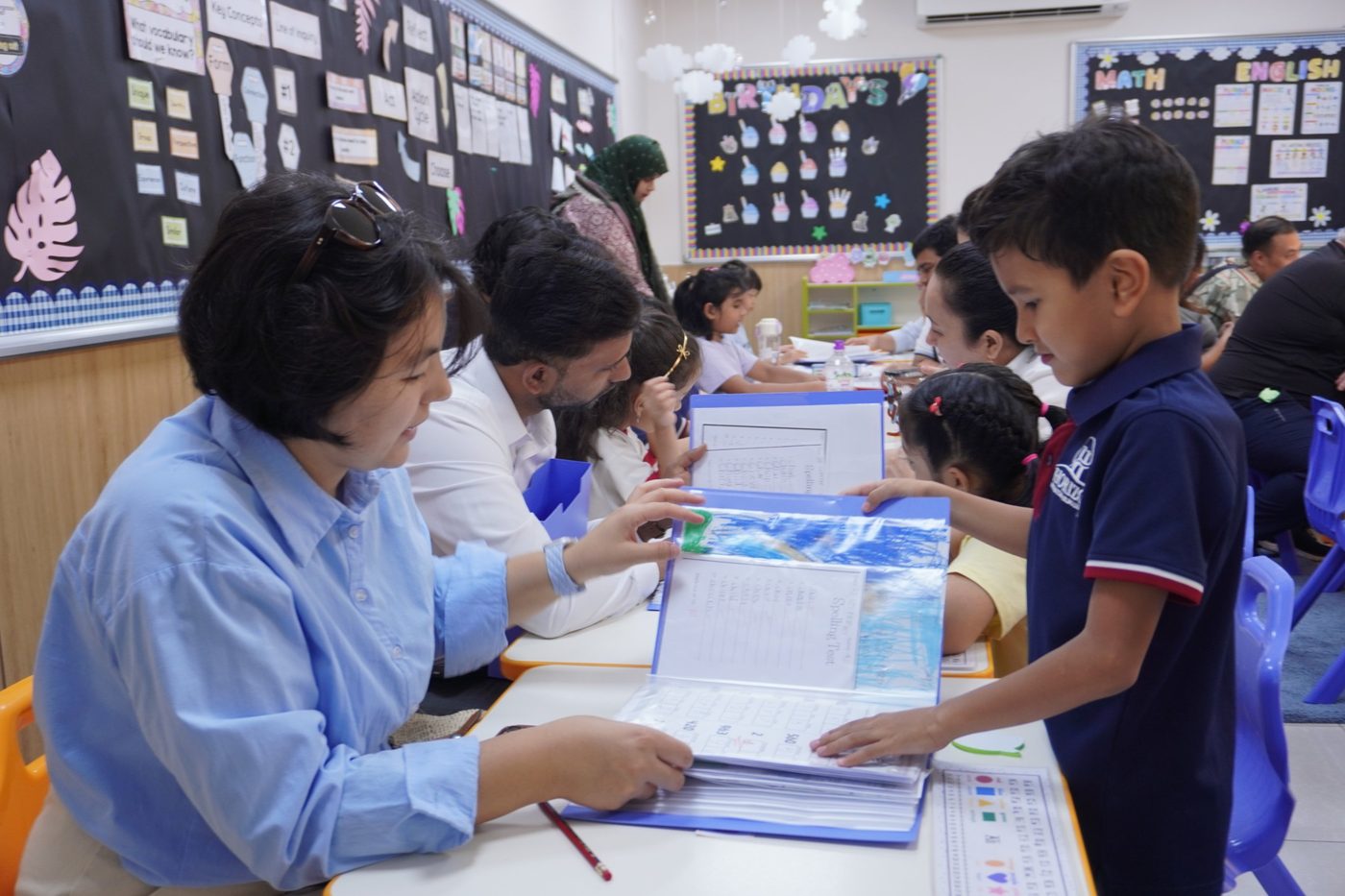
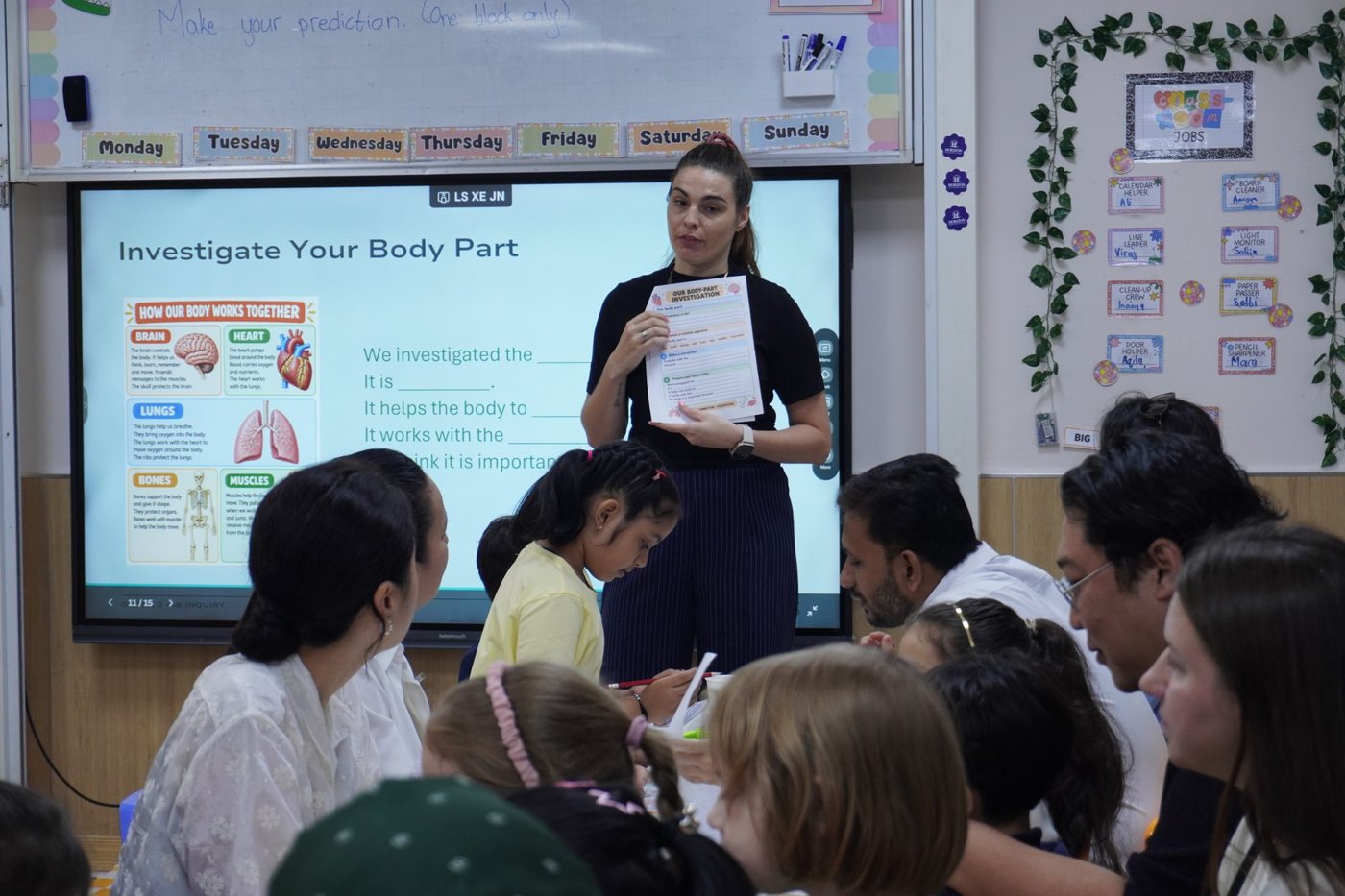
How progress is reported
- English language development is measured against the WIDA standard.
- Reading and mathematics are assessed against the PYP scope and sequence.
- Written reports, plus Student-Led Conferences.
- A portfolio curated by your child.
Better questions at home
Swap "What did you do today?" for one of these:
- What question did you ask today?
- What surprised you?
- What do you want to find out next?
Talk about the unit in your home language. Ideas move between languages.
Stay close to the learning
- Follow every unit live on Toddle.
- Join Learning in Action, when families work in classrooms alongside their children.
- Come to the Primary Learning Expo on Friday 26 March 2027.
Where the PYP leads
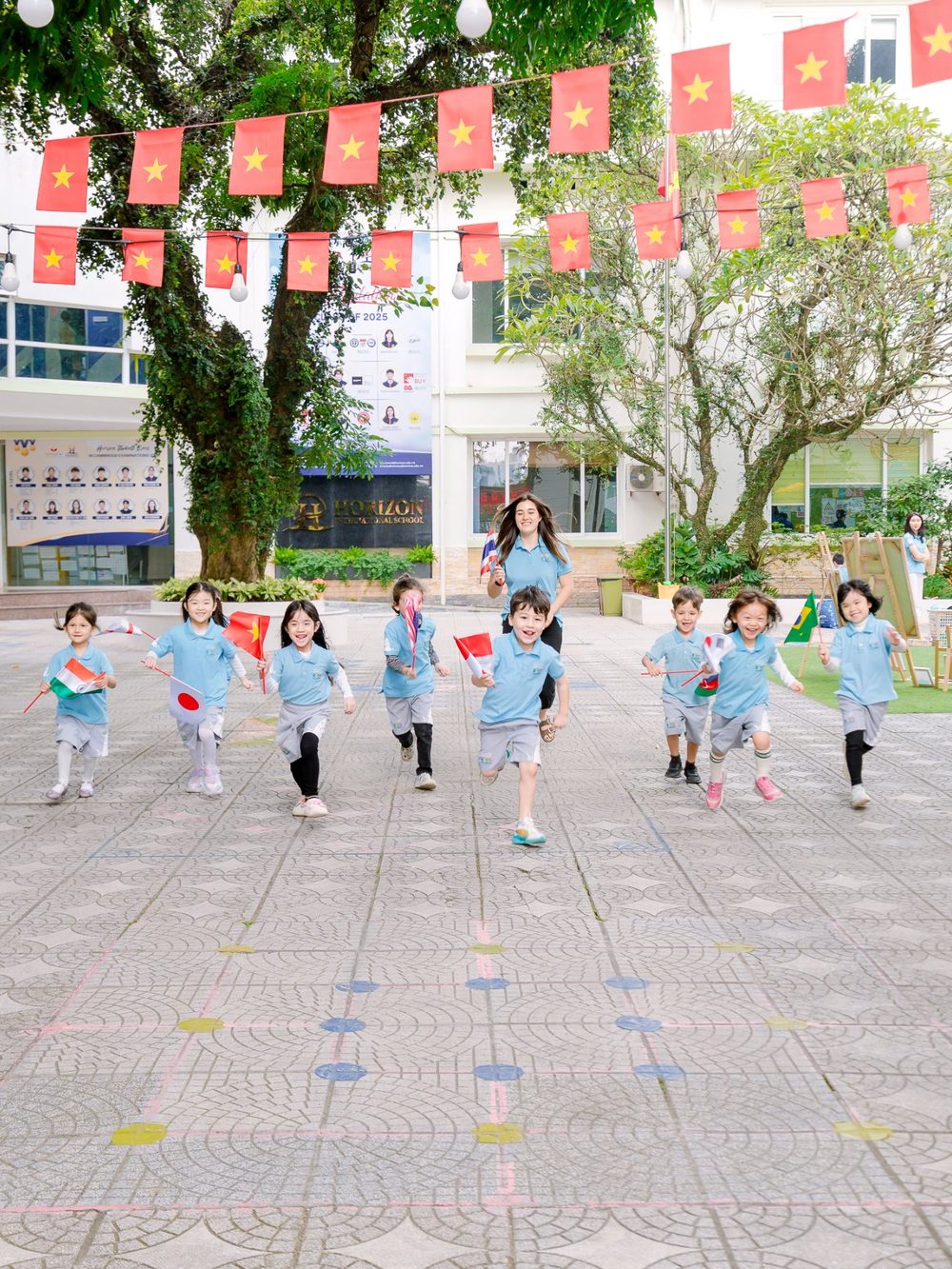
One campus, from Kindergarten to Grade 12. No transfer at 11. No re-application at 15.
The Pathways Roadmap is available in English, Vietnamese, Korean and Japanese. Ask Admissions for a copy.
Come and see it happen
Book a private tour on a normal teaching morning. No staged lessons.
Admissions also answers on Zalo and KakaoTalk at the same number.
Open Day
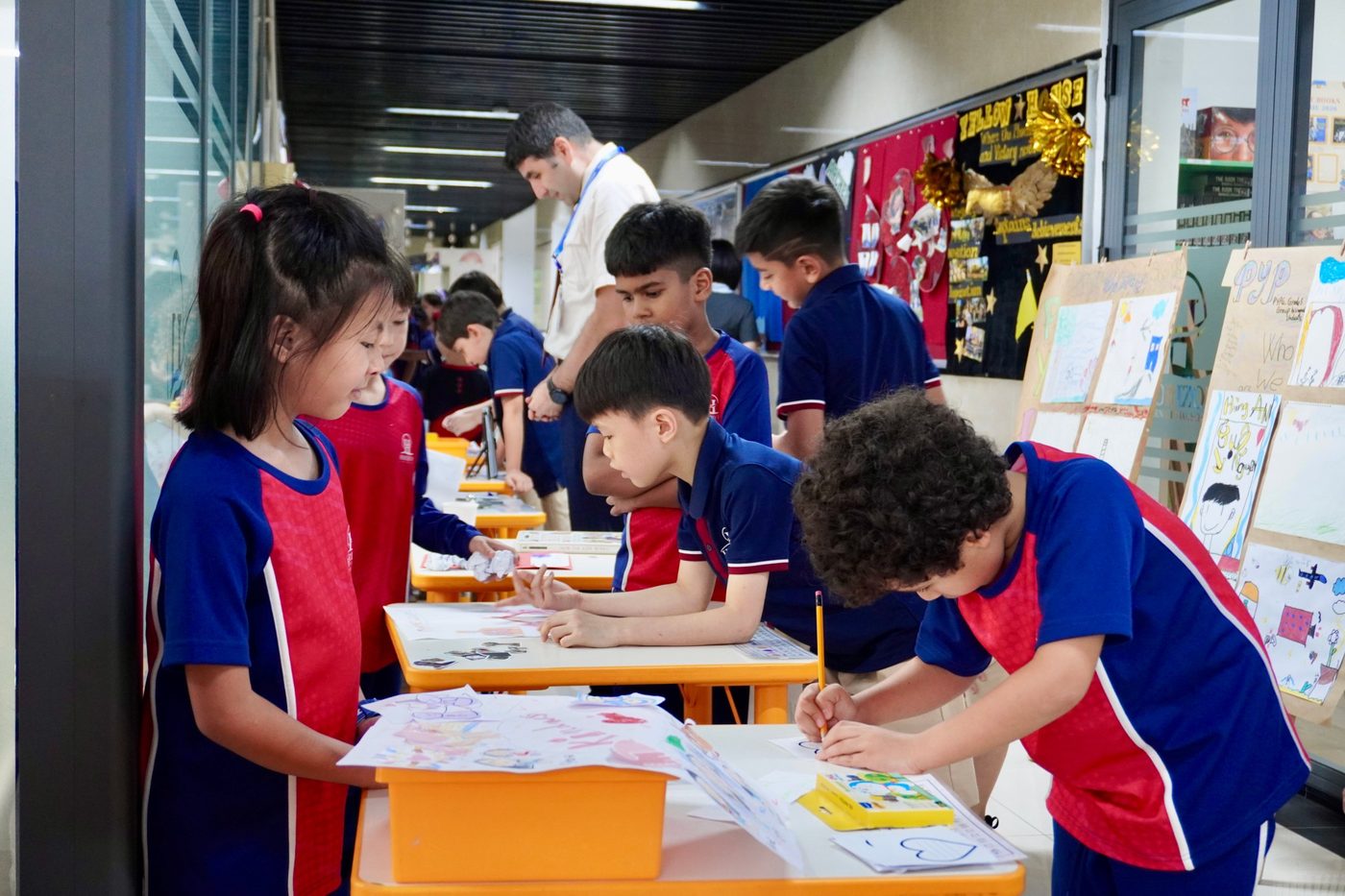
Join the next Open Day at Horizon International School Hanoi, 98 To Ngoc Van, Tay Ho.
Register for Open DayPrimary Learning Expo
Friday 26 March 2027
PYP students present what they have learned to their families.
How enrolment works
Places from Kindergarten to Grade 5 are limited. Early Bird from January 2027.
Straight answers
Does the PYP replace English and mathematics?
No. The PYP connects subjects; it does not replace them. Reading and mathematics are taught and assessed against the PYP scope and sequence, and Art, Music, PE and ICT are taught by specialist teachers.
How will I know how my child is doing?
Through written reports, Student-Led Conferences and a portfolio your child curates. Units are shared on Toddle as they happen, and your child's teacher will explain what each measure means for their current level.
My child is still learning English. Will they keep up?
Many Horizon students are building English alongside a home language. English language development is measured against the WIDA standard, with EAL teaching and targeted support inside the classroom.
What does "Candidate School" mean?
Horizon became a Candidate School for the PYP in May 2026 and is pursuing authorization as an IB World School. Candidate status gives no guarantee that authorization will be granted. The full statement is below.
What happens after Grade 5?
Students move into Cambridge Lower Secondary on the same campus, then Cambridge IGCSE and a choice of A-Level or OSSD. There is no transfer at 11 and no re-application at 15.
What does the PYP look like in Kindergarten?
Inquiry through play. Children explore, build, sort and ask questions with a teacher guiding the learning, and the same learner profile attributes are developed from the first year.
IB Candidate School status
Horizon International School is a Candidate School* for the Primary Years Programme. This school is pursuing authorization as an IB World School. These are schools that share a common philosophy—a commitment to high quality, challenging, international education that Horizon International School believes is important for our students.
*Only schools authorized by the IB Organization can offer any of its four academic programmes: the Primary Years Programme (PYP), the Middle Years Programme (MYP), the Diploma Programme, or the Career-related Programme (CP). Candidate status gives no guarantee that authorization will be granted. For further information about the IB and its programmes, visit www.ibo.org